How accessible is La Paz, Honduras for wheelchair users and slow walkers?
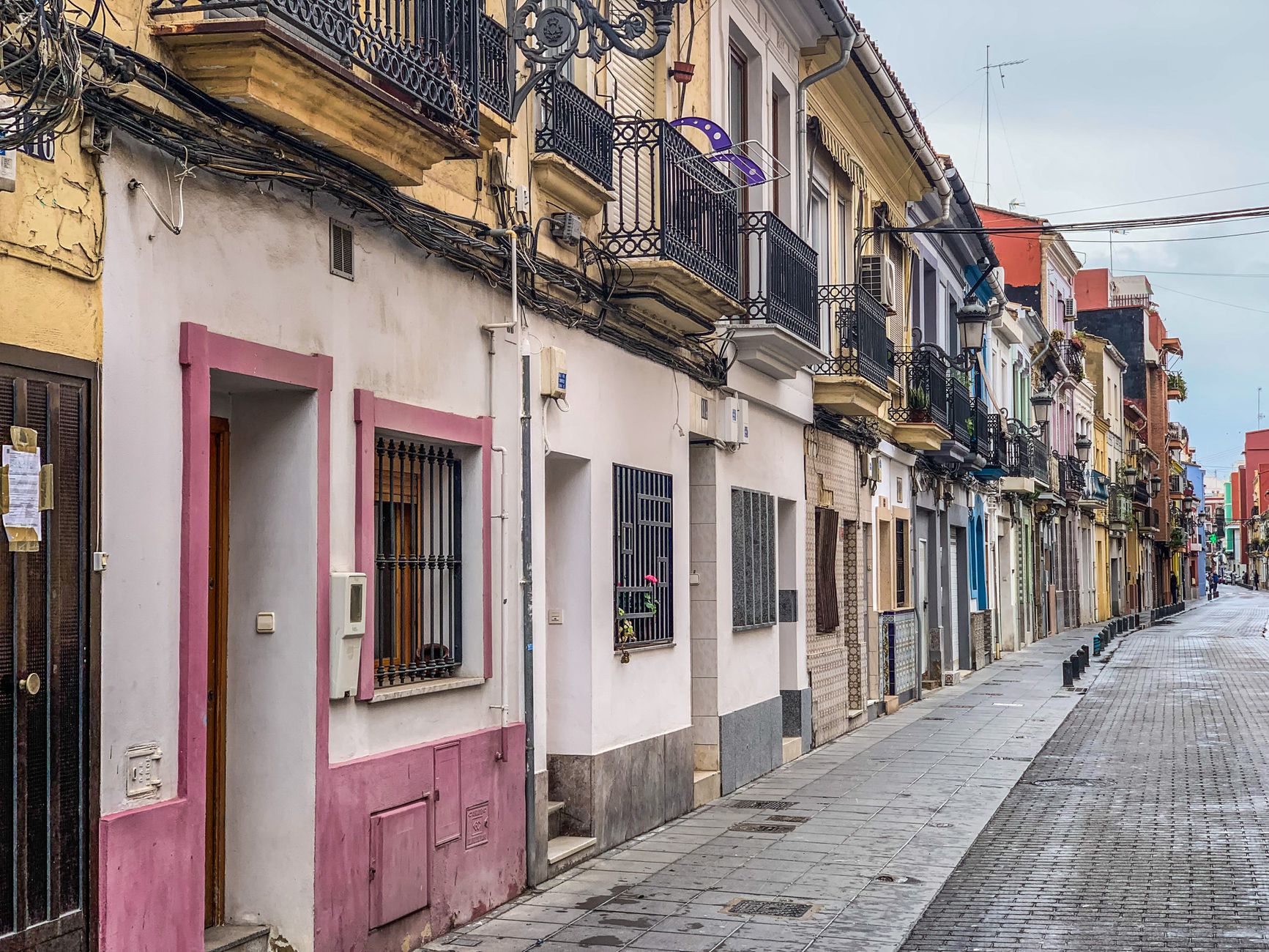 High kerbs and cobbled paving on a narrow street in a Honduran highland town
Honestly difficult: kerbs run 25-40 cm with almost no dropped crossings, lifts are essentially absent, and a trip here works only with a travelling companion and a hired vehicle.
The honest baseline
There is no accessible-tourism infrastructure in La Paz department, and pretending otherwise wastes your money. No hotel here advertises a roll-in shower, no taxi has a ramp, no bus has a lift, and no attraction has an accessible route. What does exist is a culture of practical help: strangers will carry a chair up three steps without being asked, hotel staff will move a mattress to a ground-floor room, and pickup drivers will lift a folding chair into the bed. A trip can work well on that basis. It cannot work on the assumption that anything will be step-free.
That shapes who should come. A powerchair user travelling independently will find this extremely hard, mainly because of kerbs, mud and the total absence of repair capacity. A manual chair user with one strong companion, or a slow walker who can manage a handful of steps and short distances on rough ground, can have an excellent five days centred on Marcala and La Paz Centro. Blind and low-vision travellers manage better than wheelchair users, since the barriers here are physical rather than informational. Deaf travellers face little beyond the general Spanish-language barrier.
Streets, kerbs and the market problem
La Paz Centro and Marcala are laid out on flat-ish grids near their central parks, which sounds promising until you meet the kerbs. Typical drop from pavement to road is 25-40 cm with no ramp, and where a ramp exists it is a concrete driveway lip at an angle no chair likes. Surfaces are a mix of adoquín paving blocks, poured concrete of varying vintages, and stone cobbles near the older churches. Pavements are often 80-100 cm wide, then interrupted by a power pole, a step up to a shopfront, or a parked mototaxi.
The market streets are the worst and the best at once. Stalls spill into the pavement, so the practical route is the road itself, shared with slow-moving mototaxis that will wait patiently behind you. That is genuinely workable at 7-10am on a weekday. It is not workable on Saturday and Sunday mornings, when both towns' markets are at full volume and the road is solid with people and produce. If mobility is limited, shop midweek and treat the weekend market as something to watch from a café chair on the park side.
Hotels: the four questions that decide everything
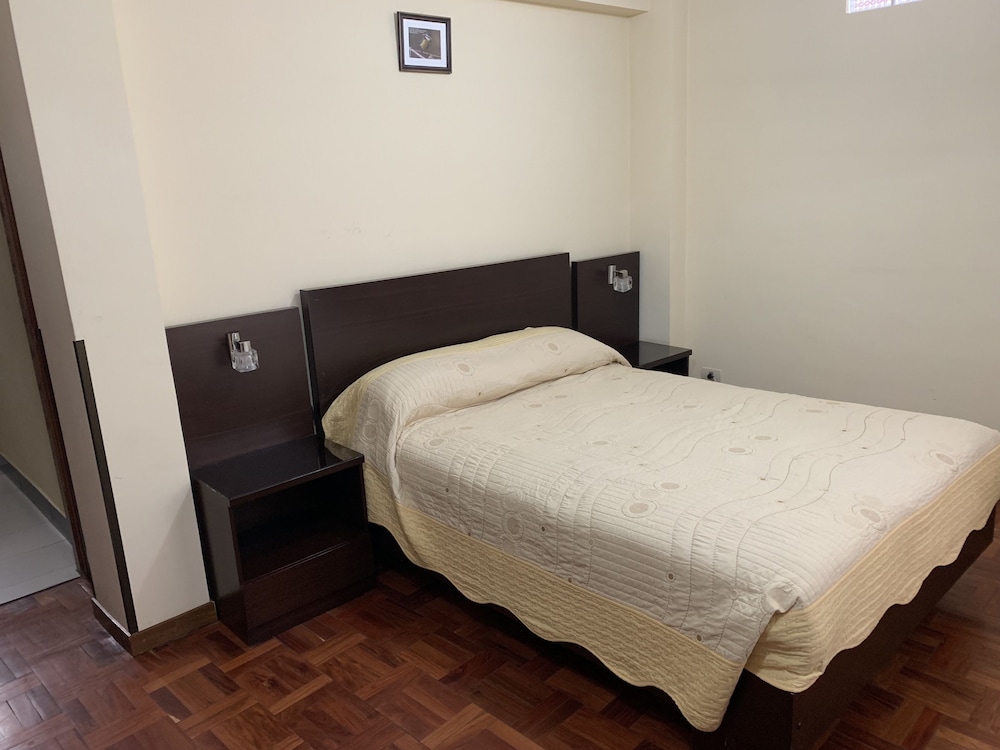
Accommodation in La Paz Centro and Marcala runs roughly $25-45 a night for simple rooms and $50-80 for the more comfortable places with generators and better beds, and almost all of it is two or three storeys with no lift. Ask, in writing, before you pay: is there a room on the entrance level with no steps from the street; how wide is the bathroom door; is the shower a step-in tray or a curbless floor drain; and is there a step at the front door or gate. The answers vary hugely between properties on the same block.
Two structural facts help you. First, older courtyard guesthouses are usually single-storey around a patio, so if the street entrance is level, everything else often is too — those beat the newer multi-floor buildings for access even when they are shabbier. Second, wet-room-style bathrooms with a floor drain and no tray are common in cheaper rooms here, which by accident produces something close to a roll-in shower. Bring a folding shower stool and a rubber-backed mat; no hotel will have either. Grab rails are essentially nonexistent, so plan around a companion, not hardware.
Getting around when steps are the issue
Mototaxis, the default local transport, are effectively unusable with a rigid chair and awkward with any chair: a high step-in, no door, a canvas side and a bench seat. Rapiditos and colectivo pickups involve climbing a steep step into a crowded cabin or a truck bed. That leaves one realistic option, and it is a good one: hire a private pickup or minivan with a driver for the day at roughly $60-100 including local runs, and use it as your door-to-door taxi. A folding manual chair rides in the bed or the boot; a powerchair generally will not fit at all.
For arrival, book a private transfer from Palmerola airport rather than piecing together buses. Expect $60-90 to La Paz Centro, about 30-40 minutes, and $110-160 through to Marcala, close to two and a half hours with a stop. Say clearly when booking that a chair travels with you and that transfer at the vehicle door will need two people; drivers here take that as a normal request. Ask for a sedan or crossover rather than a high pickup if the traveller cannot climb 50 cm, because cab height is the barrier nobody mentions.
Altitude, slopes and what that does to a slow walker
Altitude is a real factor and rarely mentioned. La Paz Centro sits around 700 m, so it feels like nothing. Marcala is about 1,300 m, and the village country above it — Opatoro, Guajiquiro, Santa Elena — climbs past 1,700-2,000 m. Anyone with cardiac or respiratory limitations will notice the difference between the two bases within a day, particularly walking uphill. Nights are also cold at those elevations, dropping to 8-12 degrees in December and January, which stiffens joints; ask hotels for extra blankets and check whether hot water is genuinely hot rather than a shower-head heater.
Slopes are the other constraint. Coffee is grown on gradients of 20-35 per cent, so a farm visit means uneven ground, loose soil and no handrails, and the walk from a farm gate to a drying patio can be 200-400 metres of slope. Village centres are built on ridges, which is why Guajiquiro's charm and Guajiquiro's stairs are the same thing. Nothing here is impossible with help; everything takes twice as long as you expect, so plan one main outing a day and a long lunch, not three stops before dark.
Medical care, equipment and repairs
La Paz Centro has the department's public hospital, Hospital General Roberto Suazo Córdova, plus private clinics and several well-stocked pharmacies around the centre. Marcala has clinics and pharmacies but no full hospital, and anything serious travels to La Paz Centro or on to Tegucigalpa, two to three and a half hours away. Pharmacies here sell a surprising range without prescription and staff are helpful, but do not count on finding continence supplies, specific catheters, or a particular brand of medication. Bring every consumable you need for the whole trip, plus a week's buffer.
For equipment, assume zero support. There is no wheelchair repair shop in the department, no supplier of cushions or castors, and no rental of mobility aids. Bring spare inner tubes, a puncture kit, a multitool that fits your chair's bolts, and a spare cushion cover, because dust and mud here are relentless. Motorcycle repair shops in La Paz Centro and Marcala are excellent improvisers and can weld or bolt almost anything, which has saved more than one traveller's frame. Charging is fine — mains power is standard two-pin, with outages of an hour or two not unusual in the rainy months.
An itinerary that works, and what to skip
The version I would book: four nights, split two in La Paz Centro and two in Marcala, with a private driver for two of the days. In La Paz Centro, the central park and the streets facing it are the flattest usable ground, cafés put chairs on the level, and a slow morning loop before the heat works well. Marcala's payoff is the coffee cooperatives — the offices and cupping labs of the town's producer associations are ordinary flat-floored buildings, and a cupping is a seated activity lasting an hour or two. That is the single best accessible experience in the department.
Skip the waterfall walks and forest trails around Chinacla and the Montecillos slopes; they are unimproved paths on steep, wet ground with no handrails and no evacuation route. Skip Guajiquiro and Santa Elena unless you are content to see them from a vehicle, which is honestly still worth doing for the ridge views. Skip the weekend markets. Add instead a drive on the paved road toward San Pedro de Tutule for the valley viewpoints, a long lunch at a comedor with street-level seating, and a farm that can drive you to its drying patio rather than walk you there.
Before you book
The questions people ask about La Paz, answered with this month’s numbers.
Effectively no. Assume every toilet you meet is a narrow-door cubicle with no grab rails and a step at the entrance. The most usable ones are in newer hotels and the larger fuel-station complexes on the highway near La Paz Centro. Plan your day around your hotel bathroom and carry your own supplies.
No ramp-equipped vehicle operates in this region. What you can book is a private car or minivan with a driver, $60-90 to La Paz Centro and $110-160 to Marcala, with staff who will help lift. Fold-and-stow chairs travel fine; powerchairs over about 100 kg generally cannot be carried.
La Paz Centro. It is lower at around 700 m, flatter near the central park, has the department's hospital and the best pharmacies, and is 30-40 minutes from Palmerola. Marcala is more interesting and more accessible in one specific way — flat-floored cupping rooms — but it sits at 1,300 m on steeper streets.