Chinacla or Marcala: which to book
 A narrow valley road descending through coffee plots toward Chinacla, La Paz, Honduras
Chinacla sits about 25 km and 700 metres below Marcala, charges roughly $12-20 a night against Marcala's $28-45, and gives you almost nothing to do after dark — here is when that trade is worth taking.
The basic difference between the two
Marcala is a market town of several thousand people with banks, restaurants, cafes, hotels and buses to Tegucigalpa. Chinacla is a small municipal seat down a winding road to the south, warmer, lower, quieter, and built around coffee farming and the river valleys that drain toward the border country. The two are separated by roughly 20-25 km of road that takes 45 minutes to an hour depending on the surface and the season. That drive is the whole decision: if you are willing to make it twice a day, you can base in Marcala and treat Chinacla as an outing.
The honest position is that most travellers should book Marcala and visit Chinacla. Chinacla makes sense as a base only if you have a specific reason to be there — family, a farm you are working with, a cooperative connection, or a genuine appetite for a village where the evening entertainment is the pulperia doorway and conversation. It is not a hardship posting; it is simply a place with two or three basic rooms rather than a hotel market.
What a night costs in each
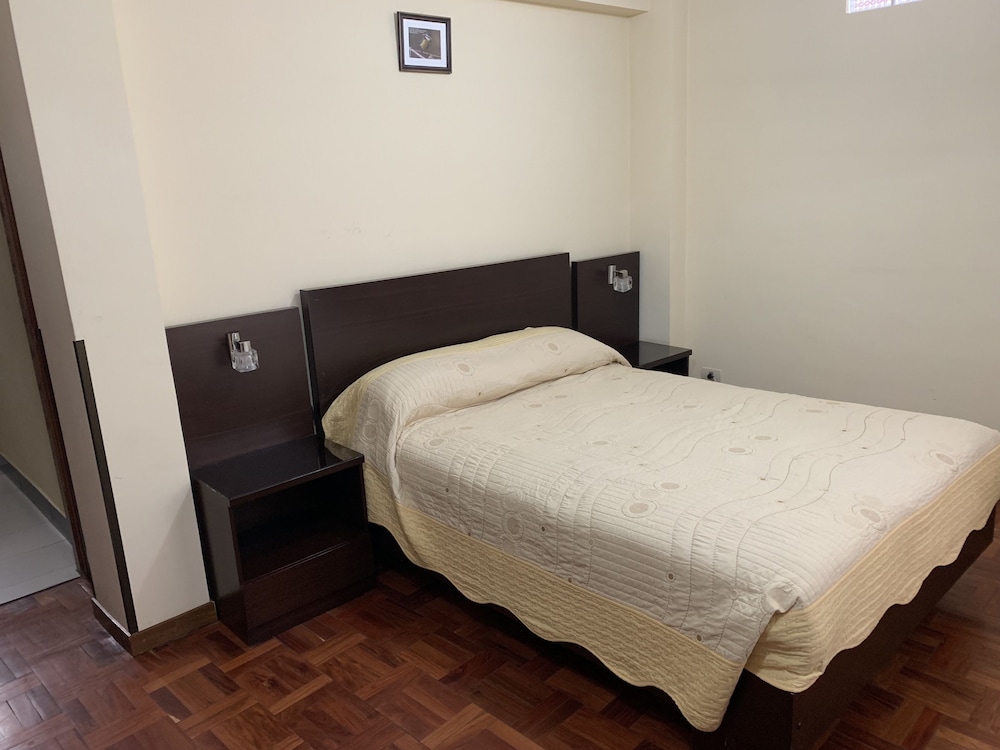
In Chinacla you are looking at a hospedaje room, generally $10-20, with a bed, a private or shared bathroom, cold water in most cases and electricity that occasionally fails in the rainy months. Meals are eaten wherever the comedor is open, usually $2.50-4 for a plate. There is no card payment anywhere and no dependable ATM, so bring small notes from Marcala or La Paz Centro. Nobody is running a booking system; you arrive, you ask, and somebody points you at a room.
In Marcala the equivalent basic room is $12-20, but the market extends up through $28-45 for hot water, wifi and secure parking, and beyond that to $50-70 with breakfast. So Chinacla saves you money only if you were going to pay for the mid-range in Marcala anyway. Realistically the saving is $15-25 a night, and it buys you a cold shower at the end of a hot day in the coffee. Weigh that against the fuel and time cost of driving up and down the hill, and the arithmetic rarely favours Chinacla.
Who Chinacla genuinely suits
Coffee people, above all. This is producing country, and the plots in the surrounding aldeas sit at a range of altitudes that gives the harvest a longer window than the high ground around Santa Elena. If you are visiting farms, buying, or working with a cooperative, sleeping in the municipality saves you the daily commute and gets you into the fields at first light, which is when picking actually happens. It also suits anyone travelling slowly who wants to spend three days in one place, walk the tracks, and be the only outsider in town.
It also suits travellers heading further south toward the border zone and Cabañas, because it shortens an already long approach. And it suits people who want warmth: at a lower elevation than Marcala, Chinacla's nights sit comfortably in the high teens rather than dropping to 10C, so the lack of hot water and blankets is less of a problem than it would be up on the plateau. If you have found the highland nights uncomfortably cold, this is where you thaw out.
Who should stay in Marcala instead
Anyone on a short trip. If you have three or four nights in the department, you want restaurants, a hot shower, a bank, a working phone signal and the ability to change your plan in the morning, and Marcala has all five. Anyone travelling with children should also stay up top, because the roads are the main risk in this region and you want to be doing them once a day, in daylight, not twice in the dark. And anyone without their own vehicle: onward transport from Chinacla is limited to a small number of daily runs, and missing one costs you a day.
Anyone combining Chinacla with other southern municipalities is also better off in Marcala. From there, Chinacla, Yarula, Santa Elena, Opatoro and the road toward Cabañas all radiate out, and none of them connect to each other along a good road. Attempting to hop between villages generally means backtracking to Marcala anyway. Treat Marcala as the hub, accept the daily driving, and keep the bed you know is dry.
What is within walking distance in Chinacla
The village core is a matter of a few blocks: the church, the municipal building, the school, one or two pulperias, a comedor or two, and a handful of houses where somebody sells prepared food if you ask. You can walk it end to end in five minutes. What is genuinely worth walking is outward: the tracks that drop toward the river through coffee and banana shade, and the ridge paths that give long views back toward the Marcala plateau. Ask locally before setting off, because plots are private and some paths cross farm land.
There is no visitor infrastructure — no guide office, no ticketed site, no signage. Swimming spots in the rivers exist and locals know them, but the water is high and fast from June to October and this is not the place to be exploring gorges alone. If you want a structured day, arrange it through a cooperative contact or your Marcala lodging. What Chinacla offers is unstructured time in a working agricultural landscape, which is either exactly what you want or nothing at all.
Getting between the two, and the road
Minibuses and shared pickups link Marcala with the southern municipalities on a morning-out, afternoon-back rhythm rather than a timetable. Expect to pay $2-4 for a seat and expect the outbound runs to leave Marcala between roughly 7am and midday, with returns concentrated in the early to mid afternoon. Ask at the stands near the Marcala market the day before, and ask twice, because the pattern changes on Sundays and market days. Arriving in Chinacla at 4pm with no plan for the return leg is how people end up paying for a room they did not intend to take.
Driving yourself, the road is the constraint. There are paved sections and there are sections that are not, with tight bends, drop-offs and the usual highland mix of loose gravel and washouts after heavy rain. From November to April a normal car handles it slowly; from May to October you want high clearance and ideally four-wheel drive, and you should not attempt it after dark. Fill up in Marcala. Fuel in Chinacla, when available, is sold informally and at a premium.
The verdict
Book Marcala. That is the answer for perhaps nine visitors in ten, and it is not a close call: for an extra $15-25 a night you get hot water, food choice, cash machines, phone signal, and buses that go somewhere. Use Marcala as the base, drive or ride down to Chinacla for a full day, be back on the plateau before the afternoon rain, and you have seen everything Chinacla offers a casual visitor without gambling on a room you cannot inspect in advance.
Book Chinacla if you have work here, a contact here, or four spare days and a taste for villages where nothing at all is arranged for you. In that case go in the dry season, bring cash in small notes, bring a torch, bring your own coffee if you are fussy, and tell somebody in Marcala where you are going. Two nights is the right length. Three is generous. A week here without a specific project would be a long week.
Before you book
The questions people ask about Marcala, answered with this month’s numbers.
Yes, and it is the right way to do it. Leave Marcala by 8am, allow 45 minutes to an hour each way, spend the middle of the day walking the coffee tracks and eating in a comedor, and start back by 3pm so you clear the worst of the road before the afternoon rain.
Assume not. There is no reliable ATM in the municipality and rooms, meals and transport are all cash. Withdraw in Marcala or La Paz Centro before you go, take small denominations, and carry more than you think you need in case you stay an extra night.
Much less cold than the high municipalities. Sitting several hundred metres below Marcala, nights generally stay in the high teens even in December and January, which is why the cold-water bathrooms are tolerable here and genuinely unpleasant in Yarula, Santa Elena or Guajiquiro.