Best hotels for remote work and reliable Wi-Fi in La Paz and Marcala, ranked
 A laptop and a cup of Marcala coffee on a desk beside a window in a highland hotel room
Nine places to work from across the department, ranked on upload speed, desk height and how often the connection actually drops, with rooms from $22 to $80.
What connectivity is really like here
The department runs on two networks and one truth: coverage is excellent in the towns and collapses fast in the hills. La Paz Centro and Marcala both have fibre from the major operators, and a hotel connected to it will give you 20 to 50 Mbps down and something like 10 to 20 up, which is enough for video calls. Outside the towns you are on mobile data. Signal along the paved La Paz to Marcala road is generally usable, patchy around San Pedro de Tutule, and effectively absent in the folds of the hills toward Yarula, Opatoro and much of Guajiquiro.
Do the obvious insurance. A local prepaid SIM costs a few dollars with data bundles around $10 for ten gigabytes, and carrying one from each of the two main operators is the standard trick for anyone working here, because where one fails the other often holds. Tethering at 4G in La Paz Centro comfortably runs a call. The time zone is a genuine asset: Central Standard, six hours behind UTC, with no daylight saving, so you sit in the same working window as Chicago and Mexico City all year and only an hour off New York in winter.
1 and 2: the bypass business hotels and Marcala's fibre-connected rooms
First are the newer hotels around the La Paz bypass and the Comayagua turn-off, $55 to $80. They exist for contractors working near Palmerola, so they have fibre, a generator that keeps the router alive, a real desk and a chair with a back. If your job involves scheduled client calls that cannot move, this is where to book. The catch is atmosphere: highway noise, an unwalkable street, and evenings spent in the room. It is a place to work, not a place to be, and a fortnight there would grind anyone down.
Second, and my pick for a stay of a week or more, are Marcala's fibre-connected hotels and aparta-suites near the parque central, $40 to $60. Speeds of 20 to 40 Mbps are common, the town is at 1,300 metres so rooms stay comfortable without air conditioning humming through a call, and you can walk out at lunchtime to a market and half a dozen coffee places. The catch is the afternoon storm season from May to October, when a heavy downpour occasionally takes the line down for twenty minutes to an hour. Keep a tethered phone ready.
3 and 4: La Paz Centro mid-range rooms and the apartment-style stays
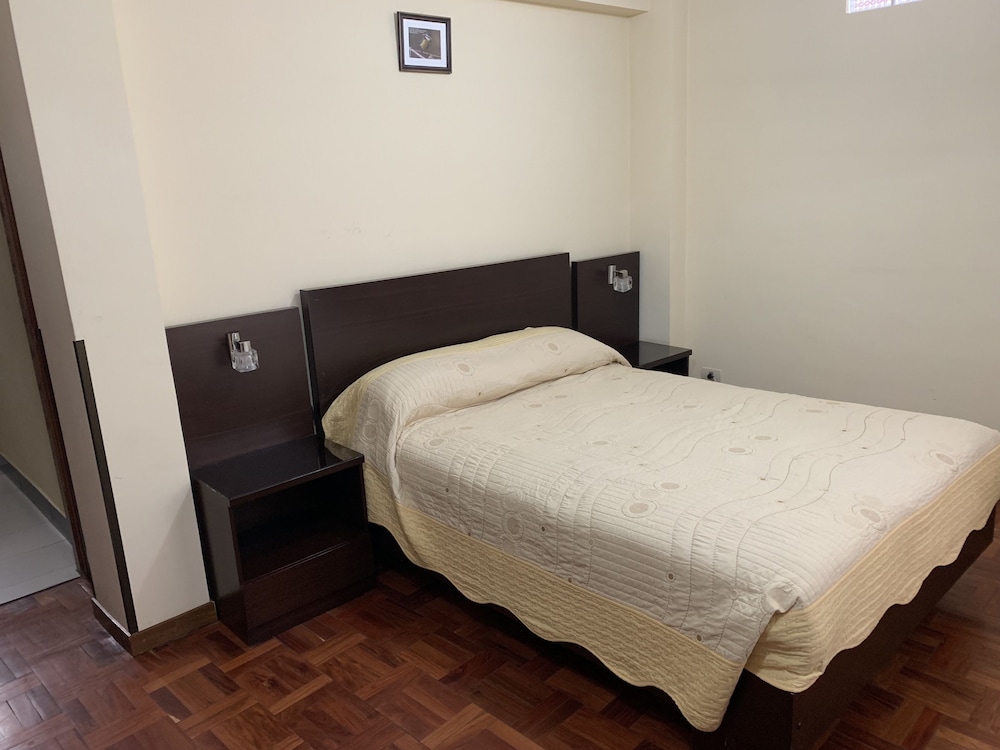
Third are the mid-range hotels within a few blocks of La Paz Centro's parque central, $30 to $50. Connections here are solid, often fibre, and you are five minutes from banks, pharmacies and lunch for $4. Two catches to weigh: the valley sits low and hot, so rooms want a fan or air conditioning running from 11:00, and street noise from motorcycles and the market starts early. Ask for a room off the street side. Furniture is the other weakness; plenty of rooms offer a bed, a television and nowhere at all to put a laptop.
Fourth are apartment-style rooms in both towns, $45 to $65, which usually include a table you can actually sit at, a fridge for lunches and a kitchen corner for the 07:00 coffee. For anyone working a full week, that combination beats a smarter hotel room with no table. The connection is generally the same fibre the hotels use. The catch is service: no reception at 23:00, no housekeeping every day, and if the router fails on a Sunday you may wait until Monday for the owner's cousin to arrive with a replacement.
5 and 6: coffee fincas and the cooperative guesthouses
Fifth are the coffee finca cabins around Marcala, Chinacla and Santiago de Puringla, $50 to $80. Some ridge-top farms have startlingly good line-of-sight mobile signal; some valley farms have none at all, and you cannot tell from photographs. Ask the host to run a speed test and send you the screenshot, then ask which operator. When it works, this is the best working environment in the department: cool mornings, shade trees, harvest activity from November to February and coffee cupped at the source. When it does not, you are driving 25 minutes into Marcala to send a file.
Sixth are the cooperative and training guesthouses at Marcala's edge, $20 to $30. They exist to host visiting technicians, so connectivity is functional and there are real tables and meeting rooms you can often use in the day. Value is exceptional and the people around you are interesting: agronomists, quality graders, cooperative staff. The catches are bandwidth contention when a course fills the place, plain rooms, and a schedule that revolves around communal meals at fixed hours. Fine for a productive fortnight, wrong if you need silence for recorded calls.
7, 8 and 9: budget rooms, family guesthouses and the villages
Seventh are budget rooms in both towns at $18 to $28, where Wi-Fi exists but is a single router shared across twelve rooms with the signal dying two doors down the corridor. Perfectly adequate for email and messaging, unreliable for anything live. Eighth are family guesthouses at $22 to $35, which have the same technical limits plus a household rhythm around you: television in the evening, children, roosters from 05:00. Both tiers are excellent value and excellent Spanish practice, and both are the wrong call if a dropped call costs you a client.
Ninth, and last, are the high villages: Santa Elena, Opatoro, Yarula, the ridges above Guajiquiro. Cabins at $30 to $45, air at 1,800 metres, silence, and a connection that is either one bar of mobile data by the window or nothing. Go up there for two nights on a weekend, not for a work week. Anyone claiming to work remotely from Guajiquiro is either exaggerating or sitting on a specific hilltop they have learned about the hard way. Plan around it rather than gambling a deadline on it.
The practical setup, and what to skip
Build a working kit before you arrive. Two local SIMs on different networks, a power bank of at least 10,000 mAh, a headtorch for the evening cuts, a small laptop stand and a lightweight travel router if you use a VPN. Test upload, not download, because upload is what fails on calls and it is what nobody quotes. Coffee places around Marcala's park and a couple in La Paz Centro have workable Wi-Fi and will let you sit for two hours on the price of a $1.50 coffee and a baleada, which is your emergency office.
Skip booking the deep countryside for a working week, and skip any hotel that will not answer a speed-test question, because the ones that can, do, immediately. Skip air-conditioned bypass rooms for long stays unless the money is somebody else's. My recommendation for a month in the department: base in Marcala at around $50 a night for the climate, the fibre and the walkable town, and take Friday to Sunday on a coffee finca or up in Santa Elena when nothing is scheduled.
Before you book
The questions people ask about Marcala, answered with this month’s numbers.
In fibre-connected hotels in La Paz Centro and Marcala, roughly 20 to 50 Mbps down and 10 to 20 up, which handles video calls. Budget rooms share one router and slow badly in the evening. Outside the towns you are on 4G, and in the high villages often on nothing at all.
Central Standard Time, six hours behind UTC, with no daylight saving all year. That puts you in step with Chicago and Mexico City permanently and one hour behind New York in winter. European calls work best before 11:00 local, which suits the cool highland mornings anyway.
Yes, and two are better. A SIM costs a few dollars and a ten-gigabyte bundle around $10. Carrying both major operators means that when one drops in the hills the other usually holds, and tethering at 4G in either town is good enough to finish a call.
Sometimes. Ridge-top fincas often have decent mobile signal; valley ones have none. Ask the host to send a speed-test screenshot and the operator name before booking, and keep the deadline work for town. Cabins run $50 to $80 and are 20 to 40 minutes from Marcala on unpaved roads.