Where to stay in La Paz
La Paz department gives you three realistic bases and almost nothing over $50 a night. Here is how to pick between the departmental capital, coffee-country Marcala, and colonial Comayagua next door.
 Low-rise guesthouse street near the central park in La Paz, Honduras
Three bases, one department
La Paz is both a small departmental capital in the Comayagua valley foothills and the name of the mountain department behind it. The city itself is compact, warm and workaday, a short paved run southwest of Comayagua, which is its link to CA-5, the Tegucigalpa to San Pedro Sula highway. Two and a half hours further southwest, up a winding paved highland road, sits Marcala at around 1,300 metres, the town behind the Café Marcala denomination of origin and the gateway to Cueva del Gigante and Cascada La Estanzuela. Comayagua, 25 minutes from the capital, is the third option and has the most beds.
For most travellers the honest answer is a split stay: one or two nights in La Paz city to see the department capital, handle banking and catch onward buses, then two or three nights in Marcala for coffee, caves and waterfalls. Rates across all three towns sit comfortably under $50. In La Paz city expect $18 to $32 for a clean double with fan, private bathroom and parking. Marcala runs $20 to $40 and you will want blankets rather than air conditioning. Comayagua stretches to $45 or $50 for something with a pool and a proper restaurant.
El Centro, La Paz city: walkable and cheap
The blocks around the central park and the parish church are where you want to be if you have no car. Within a five-minute walk you have the municipal market, the banks, pharmacies, fried-chicken counters, the bus stops for Comayagua and the mototaxis that will run you anywhere in town for well under a dollar. Guesthouses here are often signposted simply as hospedaje or hotel with a hand-painted board, and they occupy the upper floor of a family building. Ask to see two rooms before you commit, and always check the fan and the shower pressure.
Expect $18 to $28 for a double in this band. Almost all of it is cash and almost none of it appears on booking sites, so plan to arrive between 10am and 5pm when reception is actually staffed. Rooms facing the street get pickup trucks, church bells and reggaeton from pulperías; rooms facing the interior courtyard cost the same and sleep far better. Wi-Fi exists but is shared and slow after 8pm, so download maps in advance. Also confirm the front gate policy if you plan to be out past 9pm, because many small hotels lock up early.
The Comayagua road strip: rooms with parking
If you are driving, the small hotels and moteles along the highway between La Paz and Comayagua solve the two problems central guesthouses cannot: secure off-street parking and a room you can reach at midnight. Rates run $25 to $40 for a double with air conditioning, cable television, hot water and a gated lot. The trade-off is that you are a $2 mototaxi or a 15-minute walk from anything to eat, and the strip has no atmosphere whatsoever after dark. Some properties on this stretch rent by the hour as well as the night, which is normal here and not a red flag by itself.
This is also the smart base if your plan is regional rather than local, because you can be on CA-5 in minutes and at Comayagua's colonial centre in under half an hour. Fill the tank in La Paz or Comayagua rather than in the mountains, where stations are fewer and close earlier. If you are heading to Marcala the next morning, ask your hotel to confirm the first departure time the night before; highland buses often leave between 5am and 6.30am and then thin out badly by mid-morning.
Marcala: the base for coffee, caves and waterfalls
Marcala is the reason most visitors come to this department at all. It sits high and cool, smells of drying coffee from November through February, and it is the only sensible launch point for Cueva del Gigante, the rock shelter in the Estanzuela area, and for Cascada La Estanzuela. Accommodation is a mix of family-run hotels near the central park and Parque Perú, plus a handful of cabin-style places on the edge of town toward the coffee fincas. Budget $20 to $40 a night for a double. Hot water matters here in a way it does not in La Paz city, so ask specifically.
Book ahead for harvest season. Between late November and February the town fills with buyers, cuppers, co-op staff and pickers, and the better $30 rooms genuinely sell out midweek. Outside harvest you can walk in and negotiate, especially for three nights or more. Two useful checks before paying: whether the property can arrange a guide for the cave and the waterfall, since both need local permission and local knowledge, and whether breakfast is included. In Marcala a $3 breakfast with eggs, beans, cuajada, tortillas and a cup of local coffee is often thrown in free.
What $50 actually buys, and what to check
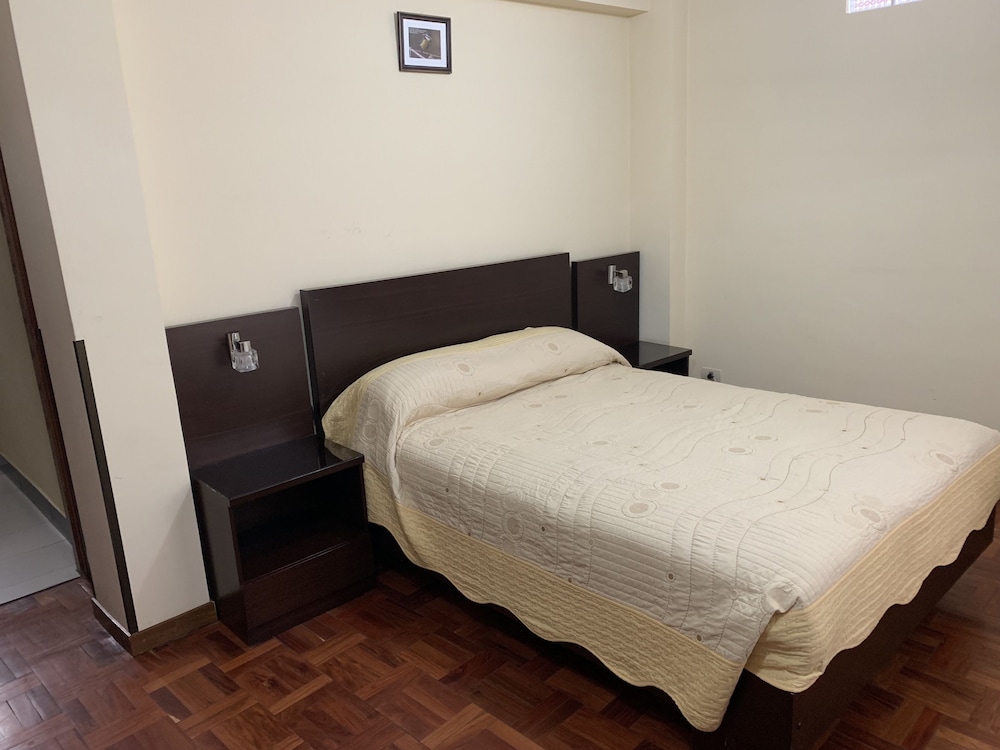
At $18 to $25 you get a fan, a private bathroom with cold water, a plastic chair, a decent lock and clean sheets. At $28 to $38 you add air conditioning in the lowlands or hot water in the highlands, a television, better Wi-Fi and usually parking. At $40 to $50, mostly in Comayagua, you get a pool, a restaurant, breakfast and a receptionist who speaks some English. Nothing in the department requires you to spend more than $50 unless you specifically want a resort experience, which is not what this region does well or cheaply.
The checklist that saves the most grief: water pressure and whether the tank is filled at set hours, a window that closes against mosquitoes, a working fan or heater, cash-only versus card, gate hours, and whether the hotel will store luggage on your day trip. In smaller places the shower heater is an electric unit at the shower head; if the wiring looks improvised, use it on the low setting or skip it. Finally, get a phone number for reception. Arriving at a locked door with no way to knock loudly enough is the classic La Paz mistake.
Booking, payment and arrival logistics
Perhaps a third of the rooms in this department appear online. The rest are booked by phone, WhatsApp or by walking in. That is fine at these prices, but it means you should treat online listings as a floor rather than a full inventory, and it means cash is king: bring enough for two or three nights plus food, because ATMs cluster around the central park in La Paz city and in Marcala and can be empty on holiday weekends. Cards work at the larger Comayagua hotels and at almost nowhere under $30.
Arriving by bus, you will be dropped near the market or on the main through road rather than at a terminal building, so pin your hotel on your phone before you leave. Mototaxis wait at the drop points and charge roughly $0.50 to $1 within town. If you land after dark, take one even for six blocks; it costs less than a soda and removes the only real risk of the evening. For onward planning, ask your host to write down bus times for Comayagua, Tegucigalpa and Marcala, because posted schedules are rare and word of mouth is accurate.
Frequently asked questions
What people ask before they set off on this one.
Marcala if you came for coffee, Cueva del Gigante and Cascada La Estanzuela, because everything you want is within an hour of town and guides live there. La Paz city if you want cheap beds, banks, buses and a short hop to Comayagua's colonial centre. Many people do both, spending one night in the capital and two or three in Marcala. Bus between them is about two and a half hours on a winding paved highland road.
Budget $18 to $32 for a clean double with fan and private bathroom in La Paz city, $20 to $40 in Marcala, and up to $45 or $50 in Comayagua for a hotel with a pool and restaurant. Cash gets you a better rate than a booking site in the lower band. Three-night stays are usually worth a 10 percent discount if you ask politely in person.
The larger properties in Comayagua and a few on the highway strip do; most family-run guesthouses under $30 do not. Withdraw cash at the ATMs around the central park in La Paz city or in Marcala before you head into the mountains. Machines can run dry on long holiday weekends, so do not leave it to the last morning. Keep small notes for mototaxis and comedores.
Coffee harvest from late November through February fills Marcala midweek with buyers and co-op staff, and Semana Santa plus the Christmas and New Year window fills everything everywhere. Outside those periods you can walk in almost anywhere and pick your room. If you must book for harvest, message the hotel on WhatsApp rather than relying on online availability, which is incomplete.
In La Paz city and Comayagua you want a fan or air conditioning because it is warm and low; hot water is a bonus you will barely use. In Marcala at around 1,300 metres the opposite is true, and nights are genuinely cool, so ask for hot water and extra blankets. Many showers use an electric heater unit at the head rather than a boiler.
Hotels in La Paz
Hotels we cover across La Paz
- Stannum Boutique Hotel & Spa 4★ · 4.5/5
- Hotel Rennova 3★ · 4.5/5
- Atix Hotel a Member of Design Hotels 5★ · 4.4/5
- Ritz Apart Hotel 4★ · 4.4/5
- Hotel Presidente 5★ · 4.3/5
- Casa Fusion Hotel Boutique 4★ · 4.3/5
- Hualimei Hotel 4★ · 4.3/5
- La Casona Hotel Boutique 3★ · 4.3/5
- Madero Hotel & Suites 4★ · 4.2/5
- Las Brisas 3★ · 4.2/5
- Residencial Alta Vista 3★ · 4.1/5
- Hotel Gran Aurum 2★ · 4.1/5
- Hotel Sagarnaga 3★ · 4/5
- Hotel Rey Palace 4★ · 3.9/5
- Panamerican Hotel 3★ · 3.8/5
- Casa Grande Suites 5★
- Casa Grande Express 3★
- Hotel Soliman 2★
- Nomada Hostal 2★
- The Adventure Brew Hostel 2★
- Lobo Hostel La Paz 1★
- Diesbu Hotel
- Met Hotel 5★ · 4.7/5
- Hotel Montecillos 3★ · 4.7/5
More guides to La Paz
All guides Itineraries · 8 min read
48 hours in La Paz
Itineraries · 8 min read
48 hours in La Paz
Two days is enough to see the departmental capital properly and still get one full day in the coffee mountains. Here is the hour-by-hour version, with rooms from about $22 a night.
 Itineraries · 10 min read
One week in La Paz
Itineraries · 10 min read
One week in La Paz
Seven days is the right length for this department: three bases, four day trips, and two full days that need no plan at all. Expect to spend $45 to $70 a day for two people, rooms included.
 Itineraries · 9 min read
La Paz in 3 days on a budget
Itineraries · 9 min read
La Paz in 3 days on a budget
Three days in La Paz department on $30 to $40 a day per person, rooms included. It is not deprivation travel here; it is simply what things cost.
Compare real prices across La Paz city, Marcala and the towns between them, and remove a verified tonne of CO2 with every booking.