Breaking the Tegucigalpa to Gracias drive: a two-day stopover in La Paz
 A mountain highway curving west through pine country toward Intibuca
Eight hours straight or two relaxed days with a night in the highlands — here is the split that turns a grim transfer into the best part of the trip.
The case against driving it in one go
Tegucigalpa to Gracias is roughly 300 km depending on the route and, on paper, six to seven hours. In practice, with the capital exit, the mountain sections beyond San Pedro de Tutule and any roadworks, it is closer to eight, and you arrive shattered with the entire western highlands seen through a windscreen. Nobody drives it well after hour five. The mountain sections between the department and Intibucá are where fatigue meets switchbacks, and they come at the end.
Split it and the arithmetic transforms: three to four hours on day one, three to four on day two, with a night at 700 or 1,300 metres in between. You get an afternoon and an evening in a part of the country that most through-traffic never stops in, you drive both mountain legs fresh and in daylight, and you arrive in Gracias in time for lunch rather than after dark. The stopover costs one hotel night at $25 to $45. It is the best-value night on any Honduran itinerary.
Two routes west, and which to take
Option one is the northern line: CA-5 from Tegucigalpa toward Comayagua, turn off at Villa San Antonio for La Paz Centro, then west via San Pedro de Tutule and on to La Esperanza in Intibucá, and finally the road to Gracias. This is the faster, better-surfaced choice and the one I take by default. Option two swings further south through Marcala before cutting north to La Esperanza — slower, rougher in stretches, and about 90 minutes more, but it gives you the coffee country.
Take the northern line if you are driving a rental sedan, if you are on a schedule, or if you are travelling in the wet months from June to October. Take the Marcala line if you have high clearance, two full days, and any interest in coffee at all — the Marcala to La Esperanza road is about 40 km and a little over an hour, and it is one of the loveliest short drives in the country. Decide before you leave the capital, because the split happens early.
Day one, 8am to 4pm: capital to La Paz Centro
Leave the capital by 8am to clear the northern exit before it thickens. You are at the Villa San Antonio turn-off in about 90 minutes and in La Paz Centro by 10.15. That is deliberately early: it gives you a Comayagua detour, 20 to 30 minutes north, for the colonial centre, the cathedral with its famous old clock, and a proper lunch in a restored courtyard restaurant for $8 to $15. Two hours there is enough to feel you have seen it.
Back in La Paz Centro by around 2.30pm, check in, then spend the late afternoon on foot. The central park, the parish church, the market blocks, and a climb to the cross on the hill above town for the view over the Comayagua valley — 30 to 40 minutes up, best between 4.30 and 5.30 when the light is on the valley floor. Dinner on the plaza at 7: grilled meat, plato típico or baleadas, $2 to $12 depending on how you go about it.
Where to sleep on the stopover night
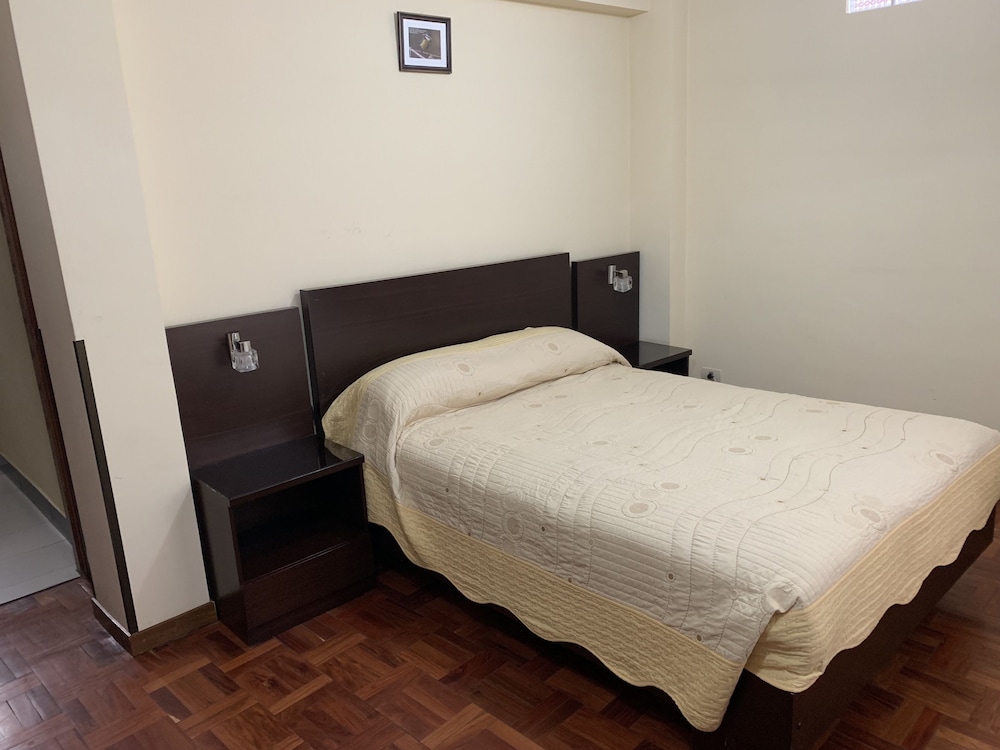
La Paz Centro is the right stop for the northern route. Rooms sit at $25 to $45 with hot water in the better ones, secure off-street parking is standard because the town serves business travel, and you are walking distance from dinner. Ask for a room off the street side; the plaza area stays lively until about 9.30 and the trucks start early. Confirm parking when booking, not on arrival.
If you have chosen the Marcala line, sleep in Marcala instead: guesthouses at $22 to $45, a colder night at 1,300 metres, and a market that starts at 6am if your timing lands on a Saturday. The upgrade for that route is a coffee farm lodging outside town at $40 to $70 with a meal included — worth it between November and February when the mills are running. Whichever town you choose, book the night in advance. Both fill with domestic travel on Fridays and around holidays.
Day two: the mountain legs to Gracias
Breakfast at 7, on the road by 8. From La Paz Centro the climb west through San Pedro de Tutule takes about 40 minutes to the first town and then two to two and a half hours of steady mountain driving to La Esperanza, at around 1,700 metres and the highest municipal seat in the country. Stop there for an hour: the market, the streets around the old church, and a coffee. It is a genuinely different climate — cold, pine-scented and often misted.
From La Esperanza to Gracias is roughly 90 km and two to two and a half hours on the western highland highway, with long views and steady curves. That puts you in Gracias between 1.30 and 3pm, with the afternoon free for the fort, the town or the hot springs outside it. Fill the tank in La Esperanza; the stretch beyond has fewer stations. If you took the Marcala line, add about 90 minutes to the whole day and leave an hour earlier.
Road conditions, fuel and the things that delay you
Fuel reliably in Comayagua, La Paz Centro, San Pedro de Tutule, Marcala and La Esperanza — and nowhere in between with any confidence. Keep the tank above half in the mountains. The road surface on the northern line is decent tarmac with sections of patching; the Marcala line has unpaved stretches that turn slick after rain. Landslides and repair works happen in the wet season, and a single-lane control point can cost 20 to 40 minutes without warning.
Fog is the underrated factor. Above 1,500 metres, cloud sits on the road from mid-afternoon in almost any month, and by 5pm you can be down to 30 metres of visibility with oncoming traffic and pedestrians. That, rather than distance, is why day two starts at 8am. Also budget for livestock, slow trucks that cannot be overtaken safely for kilometres at a time, and the fact that mobile signal disappears for 20-minute stretches between towns.
Doing it in reverse, and the one-night minimum version
Eastbound from Gracias, the split works better with the mountain leg first: leave Gracias at 8am, La Esperanza by 10.30, La Paz Centro by around 1.30pm. That gives you a full afternoon and evening in the department rather than a rushed arrival, and a short two-hour run into the capital or 45 minutes to Palmerola the next morning. If you have a flight, this direction is the one to choose, because the buffer sits where you need it.
The absolute minimum stopover is one night in La Paz Centro with no Comayagua detour: leave the capital at noon, arrive at 2.30pm, walk the town, sleep, leave at 8am. You still cut the driving into two humane halves and you still see something. What I would not do is stop for a night in San Pedro de Tutule or La Esperanza instead — the first has almost no lodging, and the second is far enough along the route that the days become badly unbalanced.
Before you book
The questions people ask about La Paz, answered with this month’s numbers.
Very much so. Direct bus connections all the way west are slow and involve changes at La Esperanza anyway. Tegucigalpa to La Paz Centro is about two hours for $3 to $4, and breaking the journey there rather than sitting through eight hours of transfers makes the day tolerable. Confirm onward departure times on arrival.
One night at $25 to $45, dinner and breakfast at roughly $10 to $18 a head, and maybe $8 in extra fuel for the Comayagua detour. Call it $50 to $80 for two people. Against that you save a hotel-arrival-after-dark and eight hours of continuous driving, which is a fair trade.
La Paz Centro if you want the shortest deviation, warm evenings, reliable hot water and secure parking. Marcala if you have high clearance, an extra 90 minutes and an interest in coffee, and if you want the colder highland night. For a first westbound trip on a schedule, take La Paz Centro.
By 4.30pm, and earlier in the wet season. Cloud settles on the sections above 1,500 metres in the late afternoon, visibility drops hard, and there is no lighting, no shoulder and regular pedestrian and livestock traffic. Every timing in this route is designed to have you parked before that.