Where to stay in San Antonio del Norte, La Paz
 Dusty plaza and whitewashed church in a small southern La Paz village at midday
One of the smallest municipal seats in southern La Paz, roughly 60 km and two to three hours from La Paz Centro, with fewer than a dozen rentable beds in the whole town — here is who should sleep there and who should day-trip.
Who San Antonio del Norte actually suits
This is a place you sleep in because you have business here, not because a guide told you to. The people who genuinely benefit from a night are the ones working the ground: agronomists visiting maize and sorghum smallholders, technicians on water and latrine projects, teachers posted to the aldeas, and the occasional birder chasing dry-forest species that do not occur in the cool coffee hills further north. Add motorcyclists riding the southern loop and anyone with family in town. For all of them the calculation is simple — the last transport out leaves in the early afternoon, so a bed here buys a full working morning.
It does not suit travellers who want a village experience with a soft landing. There is no hot water anywhere I have found, no restaurant with a printed menu, no ATM, no pharmacy open past dusk and no reliable data signal to take a call on. Low-clearance rental cars have no business on the last stretch in the rains. If your reason for coming is scenery and Lenca culture rather than a job, the highland municipalities west of Marcala give you far more for the same effort, and they have somewhere to shower afterwards.
The road south is what really decides your booking
San Antonio del Norte sits in the dry southern arm of La Paz, on the hills that drain toward the Goascorán basin, and getting there is the whole story. From La Paz Centro you head south through the dry country, and the surface changes from paved to gravel to graded dirt more than once. Budget two hours in the dry months of January and February and closer to three after heavy rain in September, when the fords and the clay sections slow everything to walking pace. Coming from the south, off the Goascorán corridor, is shorter in kilometres but the climb is rougher.
High clearance is not a luxury from June to October; it is the difference between arriving and being winched. If you do not have your own vehicle, the practical option is the morning bus or a pickup running as passenger transport, which leaves La Paz Centro early — ask the day before, because departures shift with market days and holidays. The return generally goes back before mid-afternoon. Miss it and you are staying, which is exactly how most outsiders end up needing a room here in the first place. Leave by 8am or plan to sleep.
What a bed costs, and what you get for it
Expect $8 to $15 for a room in a family house or above a pulpería, and around $15 to $20 for the best room in town on the rare occasion someone is running two or three of them. That is the cheapest sleep in the department by a wide margin: La Paz Centro runs $25 to $45 for a proper hotel room with hot water and parking, and Marcala's coffee-season rooms sit at $35 to $70. Meals here are $2.50 to $4 a plate. A night plus three meals rarely tops $25 for one person.
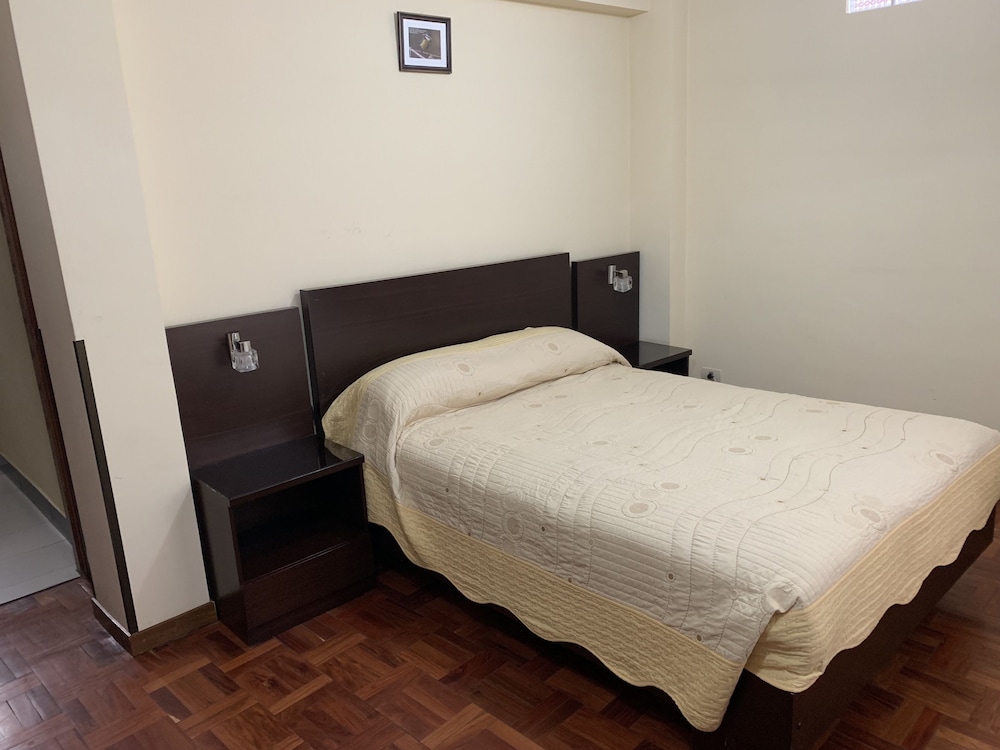
What you get is a concrete room, a foam mattress, a fan if the power is on, a shared bathroom or latrine and water drawn by bucket from a pila. Bedding is thin because nights are warm at this elevation. Nothing here appears on a booking site, so do not waste an evening searching — you arrange it by asking at the alcaldía, the pulpería or the comedor, agree the price out loud before you put your bag down, and pay cash in small notes. There will be no receipt and no card machine within an hour's drive.
Everything within a five-minute walk of the plaza
The walkable inventory is short and honest: the plaza, the church that gives the town its patron, the alcaldía, a health post, the primary school, two to four pulperías, one or two comedores that open when there is someone to feed, and a football field that doubles as the social centre from about four in the afternoon. All of it fits inside a 400-metre radius. You will have walked the entire built-up area in twenty minutes and you will have been greeted by everyone you passed, twice.
The reason to stay on your feet is what lies just beyond the last house. Footpaths run out to the smallholdings and down to seasonal streams, and the ridges give long views over the dry basin toward the south, with the haze burning off around seven in the morning. Walk at dawn or after four; between eleven and three the sun on bare hillside is punishing and there is no shade to speak of once you leave the plaza's trees. Carry two litres of water even for an hour's loop.
The base-camp alternative, and the one I would book
If you can do your business here between ten in the morning and one in the afternoon, do not sleep here at all. Book two nights in La Paz Centro instead, where the small hotels around the plaza and along the approach road from the CA-5 junction give you hot water, secure parking, working Wi-Fi and a choice of dinner for $25 to $45. Drive down early, work the morning, come back before dark. You lose two hours to the road each way and gain a functioning evening, a phone signal and clean clothes.
That is what I would book for almost every visitor. The exception is the person who needs two consecutive early starts in the aldeas — walking out to farms at six in the morning is impossible from La Paz Centro, and the room here, whatever its shortcomings, puts you at the trailhead. In that case take the local room for one night, keep expectations at the level of a spare bedroom, and treat the return to La Paz Centro on night two as the reward rather than the plan.
Heat, water and the two seasons that matter
This is dry-corridor country. The rains run roughly May to October with a hot break in July and early August, and the dry season runs November to April, hardening into genuine drought by March when streams shrink and communities ration what comes out of the tap. Daytime highs in the lower folds sit around 30 to 34°C in March and April; nights are warm rather than cold, which is why nobody sells blankets here and everybody sells fans. That is the opposite of the coffee highlands two hours north.
The best window to come is November to February: the tracks have dried, the dust has not yet taken over, and the mornings are clear enough for the long views. March and April are hot and hazy from agricultural burning, which flattens both the photographs and the air quality. September and October are the months when the road turns from an inconvenience into a genuine risk of being stranded for a day or two. If your trip is flexible, put it in January.
Eating, cash and staying contactable
Food is comedor food and it is good in the way home cooking is good: red beans, scrambled eggs, cuajada, thick hand-made maize tortillas, fried plantain, chicken soup on a Sunday if a bird was killed for it. Plates run $2.50 to $4 and coffee is $0.50. Tell whoever is cooking that you want dinner before five in the afternoon, because kitchens here do not run on a stranger's schedule. Buy your bottled water, biscuits and fruit early in the day at the pulperías; the shelves are restocked when a truck comes, not daily.
There is no cash machine. Draw everything you need in La Paz Centro or Marcala before you head south, and break the notes into small ones — nobody in a village of this size can change a large bill for a $3 lunch. Mobile coverage is patchy and often works better on the ridge above town than in the plaza. Power cuts are routine, so carry a power bank and a head torch rather than relying on a phone light. Tell someone your route and when you expect to be back.
Before you book
The questions people ask about La Paz, answered with this month’s numbers.
No hotel in the sense of a reception desk and a booking page. What exists is a handful of rooms in private houses and above shops, arranged by asking at the alcaldía, a pulpería or the comedor. Expect $8 to $20, cash, no receipt, bucket water and a fan rather than hot water.
Yes, if you leave by 8am with your own high-clearance vehicle and turn around by two in the afternoon. On public transport it is tighter: the morning bus or pickup gets you in late morning and the return usually goes before mid-afternoon, leaving roughly three usable hours in town.
From June to October, yes — the graded sections turn greasy and the fords rise fast. In January and February a normal car with decent clearance and a driver willing to go slowly will usually manage, but a low-slung rental will scrape and a puncture out here means a long wait for help.
Around $20 to $28 for one person: $8 to $20 for the room, $2.50 to $4 per meal, $0.50 for coffee and a few dollars for water and snacks. Add roughly $5 to $9 each way for bus or pickup transport from La Paz Centro if you are not driving yourself.