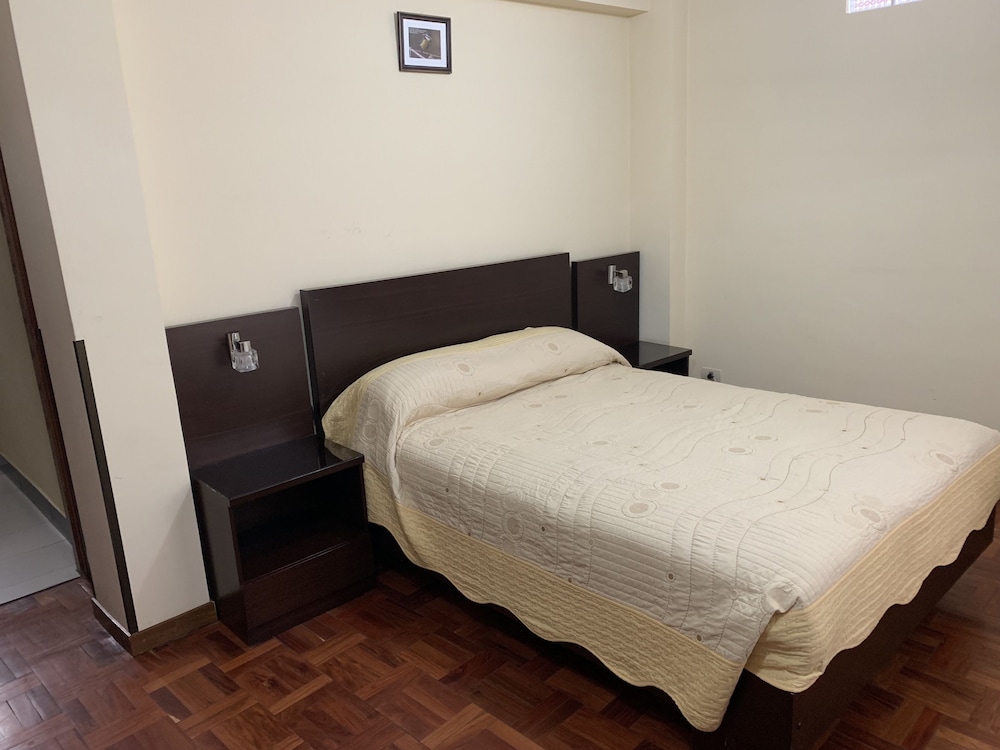
Where to stay in Santa María, La Paz
 Pine-covered hills above the small municipal seat of Santa María in southeastern La Paz, Honduras
Santa María has perhaps a dozen rentable beds in total, at $10-15 a night, and the last bus out leaves before most tourists have finished breakfast.
Who this hill town actually suits
Santa María sits in the southeastern corner of La Paz department, around 1,000 metres up where the pine and oak ridges begin their long fall toward the dry Goascorán basin. It suits three kinds of visitor: people with family or work here, cyclists and motorcyclists riding the southern loop between La Paz Centro and the CA-5, and travellers who genuinely want a Honduran municipal seat with no tourism infrastructure whatsoever. If your idea of a good night is a cold beer on a plastic chair outside a pulpería while the whole town walks past the parque central, this delivers exactly that and nothing more.
It does not suit anyone with a fixed schedule, anyone travelling with small children who need reliable hot water, or anyone who wants to see the department's headline attractions. The coffee mills, the cupping tables and the waterfall hikes are all in the western highlands around Marcala, two to three hours away on the other side of the department. Booking Santa María as a touring base is a planning error, not an adventure. Come for a night because the road brought you here, not because you expect a bed with a view and a menu.
What a night costs against the rest of La Paz
Expect $10-15 for a private room with a shared bathroom, and $15-20 at the very top if a family has fitted a private bath and a fan. That is the cheapest bracket anywhere in the department. For comparison, La Paz Centro runs about $20-45 for a straightforward hotel room with parking, and Marcala sits at $25-60 once you add hot water, proper bedding and wifi that works. Coffee farm rooms in the west can pass $60 in harvest season. Santa María is a third of that, and the price gap tells you honestly what is missing.
What the money buys: a bed, clean sheets, a bucket or a cold shower, a shared toilet, a light bulb and often a shared kitchen. What it does not buy: card payment, printed receipts, a front desk after 8pm, heating for the cool January nights, or any guarantee that water runs at midday. Bring $40-60 in small notes for a two-night stay including food and bus fares, because nobody in town breaks large bills easily and the nearest cash machine is back in La Paz Centro.
The beds that exist, by type
First, the informal hospedaje: one or two houses near the parque central keep two to four rooms for travelling teachers, health workers and traders. These are not listed online. You find them by asking at a pulpería or at the alcaldía during office hours, and you pay cash for the night in advance. Rooms are plain, walls are thin, and the rooster timetable is non-negotiable. Second, family rooms in private homes, arranged the same way, usually with dinner included for a couple of dollars more. This is the best value and the best food in town.
Third, group lodging: church halls and school buildings occasionally take organised groups with prior permission, which is how most brigades and agricultural teams sleep here. Fourth, camping. With a word to the landowner or the municipal office you can pitch on the edge of the football field or on a farm above town for nothing, and January nights at this altitude drop to around 12-14 degrees, so a sleeping bag beats a sheet. If you want a room to be waiting for you when you arrive at 6pm, book nothing here and sleep in La Paz Centro instead.
Everything within a ten-minute walk
The walkable town is essentially one square and four streets. On or beside the parque central you get the church, the alcaldía, two or three pulperías, a comedor or two serving a single fixed plate at lunch, a barber, a hardware counter and the spot where buses and pickups load. Sunday brings a modest trade in vegetables, beans and plastic goods, and that is the busiest the place ever looks. Everything closes early. By 8pm the loudest thing on the square is a television through an open window and someone sweeping a doorstep.
Walk fifteen minutes uphill past the last houses and the reward is real: a ridge view over rolling pine country to the south, hazy and blue in the dry months, and dead quiet apart from cicadas. Ask locally which track leads to the water tank or the antenna, since these are the standard evening walks and give the best light around 5pm. Beyond that, there are no signed trails, no interpretation panels and no guides for hire. Treat the surrounding hills as farmland with footpaths through it, which is what they are.
Getting in and out without a car
From La Paz Centro reckon on roughly 50 kilometres and two hours, most of it on graded gravel that turns slick and rutted in the September-October rains. Service is by minibus and pickup rather than a timetabled coach: departures cluster early morning, roughly 6-8am outbound from the villages toward the market towns, and return runs mostly finish by early afternoon. If you arrive at 3pm expecting an onward connection, you are staying the night whether you planned to or not. That is the single most useful fact about the whole southeastern corner of the department.
With a vehicle, a normal car copes in the dry season from January to April; from June onwards a pickup or anything with clearance is the sane choice. Coming from Tegucigalpa, some drivers prefer to run south on the CA-5 and turn west onto the secondary roads that thread this dry country, which is longer in kilometres but easier on the suspension. Fill the tank in La Paz Centro or on the highway before you commit, because fuel here is a barrel and a funnel, sold at a premium, and sometimes not sold at all.
Food, cash and water: the practical floor
Eating is beans, rice, eggs, tortillas, cuajada, plantain, and chicken or beef soup if you turn up on the right day. A plate costs $2-4 and lunch is the serious meal; by 7pm most kitchens are cold, so if you want dinner, say so in the afternoon. Coffee is local, boiled and sweet, and it is genuinely good even though the fancy roasting happens in Marcala. Nobody caters to vegetarians as a concept, but eggs, beans and cheese cover it if you ask plainly.
Cash only, everywhere. Carry small notes because change is scarce and a large bill can stall a transaction for ten minutes. There is no bank, no cash machine and no card terminal, so draw money in La Paz Centro or Marcala before you leave. Mobile signal exists but drops in the folds of the hills, and mobile data is the only internet you should count on. Municipal water can be rationed to certain hours in March and April, so fill a bottle and a bucket in the morning rather than assuming a tap will cooperate at 6pm.
The verdict: one night here, the rest in La Paz Centro
If you are choosing between Santa María and anywhere else in the department as your base, choose the other place. La Paz Centro gives you $20-45 rooms, parking, cash machines, pharmacies and buses in every direction; Marcala gives you the coffee, the restaurants and the hot showers. Santa María is a destination in the older sense, somewhere you go to see how a small municipal seat lives, and the honest length of a visit is one night, or an afternoon and a coffee if you can time the transport.
The one itinerary that makes real sense: drive or ride the southeastern circuit over two or three days, sleeping one night here and one further south in Lauterique or Aguanqueterique, and treat each night as a $12 room, a $3 plate and a conversation on the square. Do that in the dry season, arrive before 4pm, bring $60 in small notes and a torch, and Santa María is a good night. Arrive after dark in October expecting a reception desk and it is a mistake you will remember.
Before you book
The questions people ask about La Paz, answered with this month’s numbers.
No. Nothing here is listed on booking platforms, and the rooms that exist are arranged in person at a pulpería, a family house or the alcaldía during weekday office hours. Arrive before 4pm with cash in small notes, ask openly for a room, and expect to pay $10-15 for the night.
They sit at opposite ends of the department. Reckon on two and a half to four hours depending on the route and the state of the gravel, usually via La Paz Centro rather than any direct hill road. Nobody sensibly commutes between the two, so plan separate legs and separate nights.
Assume not. Rooms in this bracket have a cold shower or a bucket, and January nights at around 1,000 metres drop to about 12-14 degrees, which makes a dawn wash bracing. If hot water matters to you, sleep in La Paz Centro or Marcala where $25-60 buys a heated shower and warmer bedding.