Montaña de Opalaca
A vast, barely visited cloud forest massif on the roof of western Honduras, reached from Marcala and best walked with someone who lives on it.
 Cloud forest and pine ridges of the Opalaca massif west of Marcala
What to expect at Montaña de Opalaca
The Opalaca massif is one of the largest blocks of highland forest in western Honduras, straddling the borders of La Paz, Intibucá, Lempira and Santa Barbara and rising well above 2,000 metres. It has carried reserve status since the wave of cloud forest protections declared in the late 1980s, and it matters for the same reason the other highland reserves do: the rivers that supply tens of thousands of people downstream begin under this canopy. It is also deeply Lenca country. The communities on its skirts farm coffee, maize and beans, hold their own land traditions, and have been at the centre of national arguments over water and forest for years. For a visitor, Opalaca is the least packaged nature experience in the region, with no gate, no map board and no marked circuit, only tracks, farms and forest.
What a day here actually looks like is a slow climb on logging and farm roads out of a village on the Marcala side, then a walk into standing forest where the light drops and the ground goes spongy underfoot. You pass coffee under shade trees first, then pine and oak with grass beneath, then the transition zone where moss coats every trunk and the tree ferns start. Streams cross the track constantly. There are no signposted viewpoints; the views come at clearings and ridge saddles, opening west over Intibucá and back east towards Marcala. Birdlife is the reward for patience: emerald toucanets, trogons, warblers in the mixed flocks, and, in the right patches, the quetzal that everyone hopes for and few visitors see. Expect mud, expect cloud, and expect to be the only outsider on the mountain.
Plan this as a guided day trip from Marcala rather than an independent wander. Ask at your hotel or at one of the coffee cooperatives in town the evening before, and agree a village, a driver and a walking route. Go in the dry months if you want to move quickly, and accept slow, wet walking otherwise. Take waterproofs even in March, two litres of water, food for the whole day and cash in small notes. Do not plan to camp without a local arrangement; land here is owned and used, and turning up with a tent is bad manners. Anyone with a serious interest in birds should build in two mornings rather than one, since a single visit in cloud can produce almost nothing.
Getting there needs a vehicle. From La Paz Centro, drive or take a bus west to Marcala, a journey of roughly two and a half to three hours on a mix of paved and rough road, with buses charging around $5. Marcala is the base. From there, tracks head north and west towards the Opalaca skirts, and the last stretch to any trailhead is a rough climb best done in a 4x4 or a hired pickup; allow one to two hours from Marcala depending on the village. There is no scheduled bus that puts you at a trailhead, though pickup trucks run to some communities on market days. Chartering a truck with a driver who knows the tracks is the normal solution and the one every local will recommend.
There is no entrance fee, no permit counter and nothing to pay to walk into the forest. Costs are transport and people. A pickup charter from Marcala with waiting time runs roughly $50 to $80 for the day depending on distance and fuel. A community guide asks around $20 to $30 for a group, and it is normal to add a tip if the day runs long. Buses from La Paz Centro to Marcala cost about $5 each way. A room in Marcala the night before sits comfortably under $50 and often nearer $25. Meals cost $3 to $6, and a bag of local coffee to take home is $6 to $10. Budget around $60 to $90 a head for two people sharing transport, less in a group of four.
January to April is the practical season: drier tracks, firmer ground, and mornings clear enough to see across to the next range. May to October is the wet half of the year, when the massif does what cloud forest does and sits under permanent grey; the forest is gorgeous and the roads are the problem. November and December are cold and often clear early. Hour by hour, aim to leave Marcala by six, be walking by eight, and turn back by two so you are off the rough tracks before dark, which falls fast and early. Avoid the days immediately after heavy rain, when the descent by vehicle is genuinely unpleasant and occasionally impossible.
This suits experienced walkers, birders and travellers who prefer places without infrastructure. It is a poor choice for small children, for anyone with mobility limits, and for wheelchair users, since there is no accessible ground anywhere on the route. Teenagers with stamina enjoy it. It is not a rainy-afternoon fallback and it is not a one-hour stop; it is a committed day with a long drive at both ends. Travellers who want cloud forest with less effort should look at Montecillos or the ridge above Guajiquiro instead, both of which are shorter days from a comfortable base.
Combine it with Marcala itself, which is fifteen minutes from most trailhead roads by vehicle and where the coffee cooperatives, the market and the plaza fill an easy afternoon. The hot springs outside Marcala are a natural end to a muddy day, and the waterfalls in the Chinacla direction fit the following morning. Honest caveats: Opalaca is a name that appears on maps far more confidently than it appears on the ground, and there is no defined visitor route, no ranger and no rescue. Phone coverage is unreliable. It is also working land with real community politics, so walk with a local, ask before photographing people or houses, and do not treat farms as scenery.
Questions about Montaña de Opalaca
Entry is free because there is no staffed entrance. The cost is getting there: a pickup charter from Marcala with a driver runs roughly $50 to $80 for the day, and a community guide asks about $20 to $30 for a group. Buses from La Paz Centro to Marcala are around $5 each way, and a room in Marcala the night before is usually well under $50. Two people sharing should budget $60 to $90 each, less in a group.
There is no ticket at any hour, so no special windows exist. The forest is open access in daylight and nobody collects money at a barrier. The way to cut the price is to share the vehicle and the guide, since both are charged per group rather than per person, and to travel to Marcala by public bus rather than by taxi. Bring your own food, because there is nothing to buy once you leave the town.
A full day from Marcala. Reckon on one to two hours of rough driving each way to reach a trailhead, then four to six hours of walking depending on the route. From La Paz Centro it becomes a two-day trip, because the drive to Marcala alone is two and a half to three hours. Birders normally stay two nights in Marcala and take two early mornings on the mountain instead of one long push.
The massif has no opening hours and no closed days, but weather effectively shuts it. From June to October heavy rain regularly makes the access tracks impassable for anything but a serious 4x4, and drivers in Marcala will simply refuse the trip after a storm. Land access also depends on the community you enter through, so a route that worked last season may need a different permission this one. Always confirm on the morning itself.
There is nothing to book officially, but arrange the driver and guide the evening before in Marcala through your hotel or a coffee cooperative. That is the only reliable way to reach a trailhead, and it lets you agree the price, the pick-up time and the return in advance. Pay cash. Do not turn up in a village without a local contact expecting to hire someone on the spot, especially at weekends when people are working their own plots.
Marcala is the transport hub and the practical base; buses from La Paz Centro terminate there for about $5 after two and a half to three hours. No scheduled bus reaches the Opalaca trailheads. Pickup trucks serve some skirt communities on market days, but timings are informal and one-way in practice. The standard approach is a chartered pickup from Marcala, one to two hours each way, which also solves the problem of getting back down before dark.
Hotels near Montaña de Opalaca
Every hotel we cover in Marcala
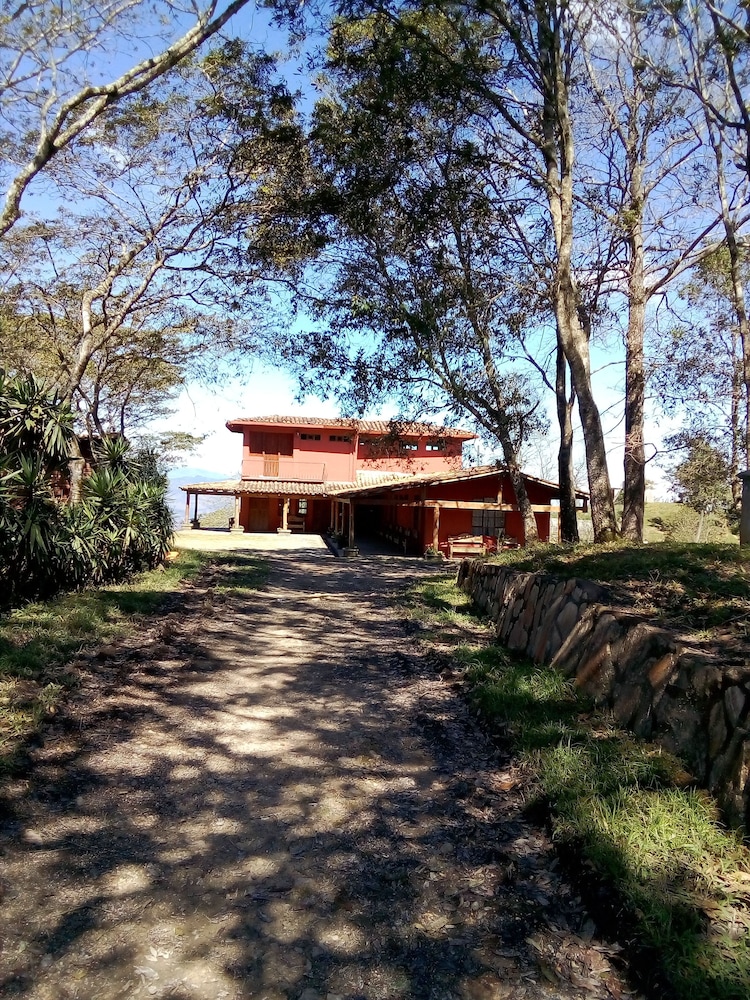
- Diesbu Hotel 34 km away
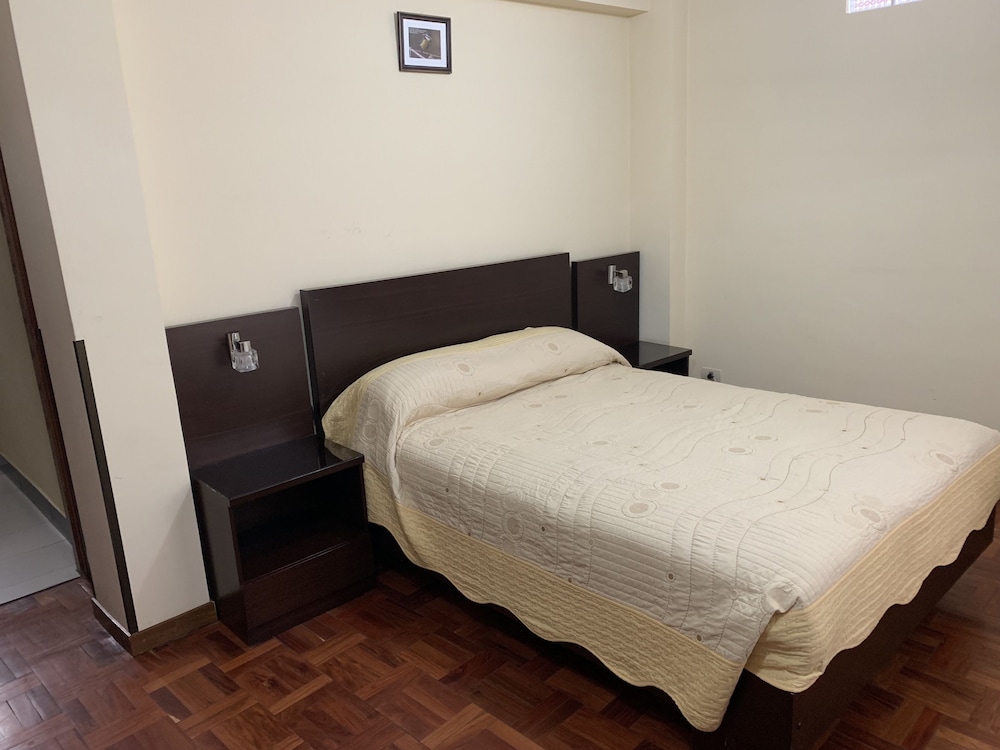
- Hotel Soliman 2★ · 36 km away
More things to do
All things to do


From the journal
All posts Comparisons & rankings
Best budget hotels in La Paz, Honduras under $50 a night
Comparisons & rankings
Best budget hotels in La Paz, Honduras under $50 a night
Almost every bed in La Paz department sits under $50, so the real question is what separates a $18 room off the parque central from a $42 one with hot water, parking and a door that locks properly.
 Comparisons & rankings
Hotels with free parking in La Paz, Honduras, ranked
Comparisons & rankings
Hotels with free parking in La Paz, Honduras, ranked
Nine kinds of stay across the department scored on secure overnight parking, from gated courtyards in the centre at $28 to highway forecourts at $45 with a night watchman.
 Comparisons & rankings
Family-friendly hotels in La Paz, Honduras, ranked
Comparisons & rankings
Family-friendly hotels in La Paz, Honduras, ranked
Eight stay types across the department judged on triple rooms, cooling, food within walking distance and whether the kids will last the two-hour drive to Marcala, with rates from $22 to $48.