Cerro Guajiquiro
The high Lenca ridge above Guajiquiro town, where potato fields give way to pine, then to dripping cloud forest and a 2,000-metre view over half the department.
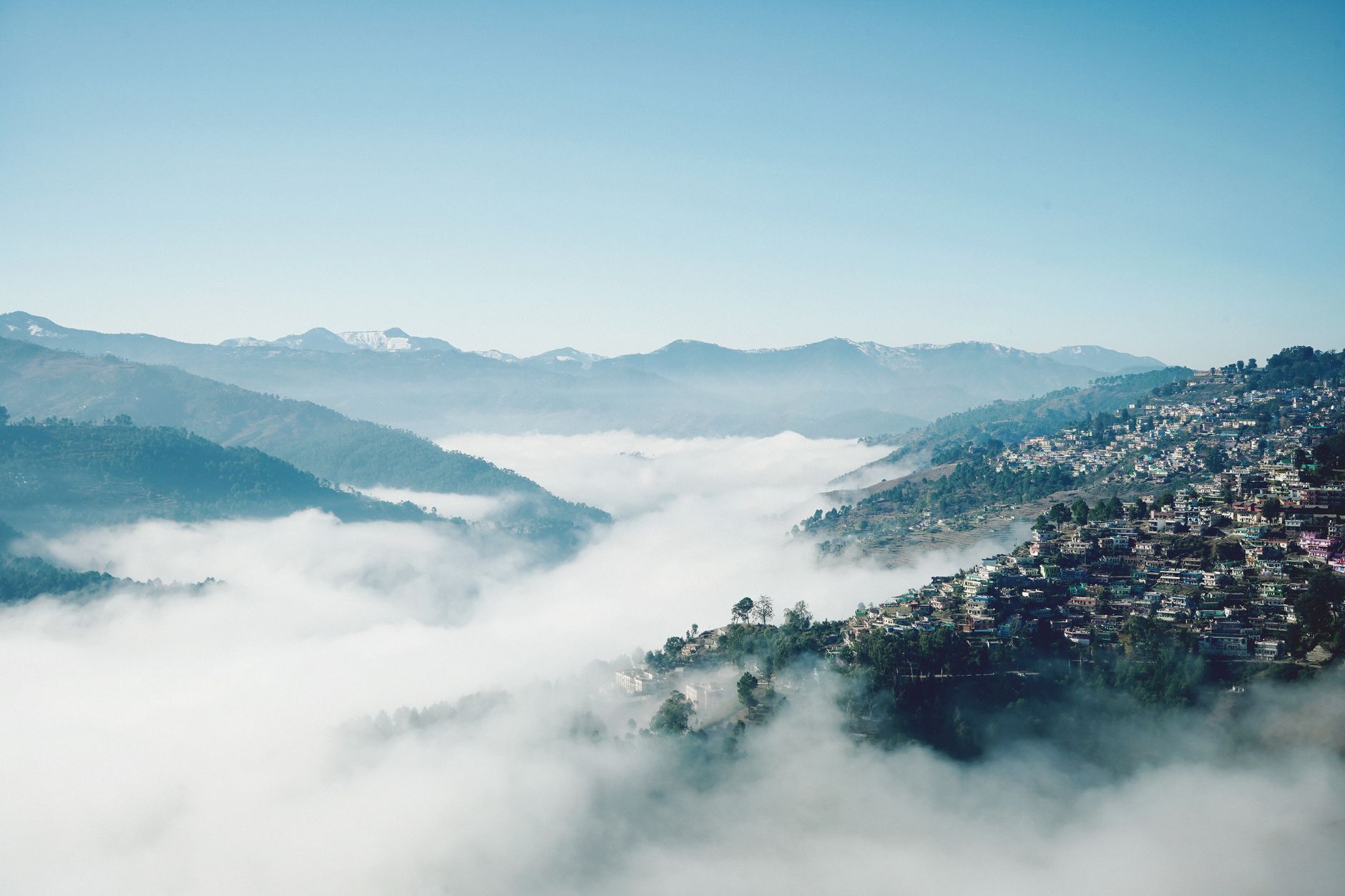 Cloud forest ridge above the Lenca town of Guajiquiro in highland La Paz
What to expect at Cerro Guajiquiro
Guajiquiro is one of the highest municipal seats in Honduras, a Lenca town sitting at roughly 1,800 metres about 45 kilometres west of La Paz city. The ridge that rises behind it climbs past 2,200 metres into a band of cloud forest that has carried protected status since the late 1980s, when Honduras created a national network of highland forest reserves to safeguard the springs that feed the lowlands. That is the point of the place: this massif is a water tower. Streams born under the moss here run down to farms, coffee plots and taps across the department. The slopes below the forest are worked ground, planted with potatoes, cabbage, beans and, at lower elevations, coffee. Above them the vegetation changes fast, from open pine and oak to a tangle of tree ferns, bromeliads and epiphytes that stays wet almost every month of the year.
A visit is a walk, not a tour. You arrive in town, ask at the municipal office or at the plaza for someone to walk with, and set off on farm tracks that climb past milpas and greenhouse frames. Within forty minutes the fields thin out and you are in pine, with the town shrinking below you and the roof of the church catching the light. Another hour brings the first cloud forest, where the trail narrows, the ground stays soft and the temperature drops several degrees in a few hundred metres. Near the top there is a cleared shoulder with antennas and, on a clear morning, a long view east towards Montecillos and south across the valleys towards Opatoro and Cabañas. Cloud usually rolls in from mid-morning; by noon the view can vanish entirely and the forest fills with the sound of dripping water.
Plan it as a full day out of La Paz Centro or as an overnight if you want the summit before the cloud. There is no visitor centre, no ticket window and no marked trail network, so a local guide is not a luxury but the practical way to do it: paths braid across private plots and it is easy to end up in someone's potato field. Bring layers, because the difference between the sunny plaza and the wet ridge is dramatic, plus two litres of water, food, and boots you do not mind ruining. Nothing is sold on the mountain. Most visitors sleep the night before in La Paz Centro, where simple rooms sit comfortably under $50, and take the first bus up rather than trying to do the round trip and the climb from Tegucigalpa in one push.
Getting there is the hardest part of the day. From La Paz Centro, buses and pickup trucks marked Guajiquiro leave from the small terminal beside the municipal market, generally in the early morning and again around midday, and take two to two and a half hours for a fare of roughly $3 each way. The road is paved for the first stretch out of town and then becomes gravel and packed earth, climbing steadily with switchbacks. In your own vehicle allow around two hours and take a high-clearance car or a 4x4; ordinary saloons manage it in dry weather but suffer. From Tegucigalpa, drive west on CA-5 towards Comayagua, turn off for La Paz after about 90 minutes, then follow signs for Opatoro and Guajiquiro. The last bus back down usually leaves in the early afternoon, so confirm the time with the driver on arrival.
It costs nothing to walk up. There is no park gate, no entrance fee and no charge for parking on the plaza. What you pay for is help and transport: a community guide typically asks around $15 to $25 for a group for the day, which is money well spent and goes straight into the village. Chartering a pickup from La Paz Centro to the trailhead and back runs roughly $40 to $60 depending on how long the driver waits. Bus fares are about $3 each way. A plate of eggs, beans and tortillas in one of the comedores on the plaza costs about $3 to $4, and a bag of tortillas and cheese for the walk about $2. If you camp on the ridge, offer a donation of around $5 to whoever owns the land you sleep on.
February to April is the clear season and the best window for the view, with cool mornings, hard light and dry tracks. From late May through October the rains come, the gravel road turns greasy, and the summit sits in cloud for most of the day; the forest is at its most spectacular then but you will see thirty metres of it at a time. November to January is cold, misty and quiet, with mornings that can sit near five degrees on the ridge. Hour by hour, the pattern barely changes: leave the plaza by seven, be on the shoulder by ten, and be off the exposed ground before the afternoon build-up. Sunday is market and mass day in town, which is worth seeing but makes transport busier and the plaza slower.
It suits fit walkers, birders and anyone who wants highland Honduras without a fence around it. Teenagers who like a real climb do well; younger children can walk the lower farm tracks for an hour and get much of the atmosphere without the ascent. It does not suit wheelchair users at all, and it is a poor choice for anyone with a one-hour gap in their day, since the drive alone eats a morning. Anyone bothered by altitude should take the first stretch slowly. On a rainy afternoon the mountain is genuinely miserable and the road down is worse, so if you wake to heavy weather, swap the plan for the town, the church and the market rather than pushing on.
Fold in the town itself: the plaza, its whitewashed church and the small Lenca craft stalls sit five minutes from where the bus drops you, and the road towards Opatoro, half an hour away, gives more high views without any walking. Cerro Cangual rises across the valley for those with a second day. The honest caveats are simple. There is no infrastructure here of any kind, no toilets, no signage, no rescue service and patchy phone signal. The quetzal is often mentioned and rarely seen; come for the forest rather than for a bird list. And the summit itself is a cleared antenna site rather than a wild peak, so the reward is the walk and the ridge view, not a photogenic top.
Questions about Cerro Guajiquiro
Nothing to enter. There is no gate, no ticket and no parking charge. Your real costs are transport and a guide: buses from La Paz Centro run about $3 each way, a chartered pickup with waiting time is roughly $40 to $60, and a community guide for a group asks around $15 to $25 for the day. Meals on the plaza cost $3 to $4. Budget about $30 a head if you take the bus and share a guide.
The question does not really apply here, because there is no ticket office at any hour. The mountain is open access from first light to dusk and nobody collects money at a barrier. What is not included is guiding, transport and food, which are always paid. If you want the cheapest possible day, take the early bus up, walk with a group so the guide fee splits several ways, and carry your own lunch from the market in La Paz Centro.
Allow a full day. The drive or bus ride from La Paz Centro takes two to two and a half hours each way, and the climb from the plaza to the antenna shoulder takes about three hours up and two down at a steady pace. Add an hour for stops and lunch. If you only have half a day, walk the farm tracks for ninety minutes above the town instead, which still gives pine forest and a wide valley view.
No. There are no opening days or closing days on the mountain itself, and no seasonal shutdown. In practice heavy rain closes it for you: from June to October the gravel road can become impassable for ordinary cars after a storm, and landslips occasionally block it for a day or two. The municipal office where guides are arranged works Monday to Friday, roughly 8:00 to 16:00, so arriving at the weekend means asking around the plaza instead.
No booking system exists, but arranging a guide a day ahead by phone through your hotel in La Paz Centro or Marcala saves an hour of standing on the plaza. Nothing else needs reserving: buses are boarded, not booked, and there is no accommodation on the mountain. If you want a pickup charter, agree the price and the return time before you leave La Paz, in cash, and confirm whether waiting time is included.
The bus terminus is the Guajiquiro town plaza, which is also the trailhead for practical purposes; the farm tracks start five to ten minutes uphill from it. Buses and pickups marked Guajiquiro leave the small terminal beside the market in La Paz Centro in the early morning and around midday, and the fare is about $3. The last service back down usually leaves in the early afternoon, so check the departure time with the driver as soon as you arrive.
Hotels near Cerro Guajiquiro
Every hotel we cover in Guajiquiro
- Hotel Montecillos 3★ · 4.7/5 · 17 km away
- Hotel Soliman 2★ · 21 km away
- Diesbu Hotel 23 km away
- Met Hotel 5★ · 4.7/5 · 9773 km away
- Casa Grande Hotel 5★ · 4.6/5 · 9773 km away
- Hotel Mitru Sur 4★ · 4.6/5 · 9773 km away
- Suites Camino Real 4★ · 4.6/5 · 9773 km away
- Stannum Boutique Hotel & Spa 4★ · 4.5/5 · 9773 km away
- Hotel Rennova 3★ · 4.5/5 · 9773 km away
- Atix Hotel a Member of Design Hotels 5★ · 4.4/5 · 9773 km away
- Ritz Apart Hotel 4★ · 4.4/5 · 9773 km away
- Hotel Presidente 5★ · 4.3/5 · 9773 km away
- Casa Fusion Hotel Boutique 4★ · 4.3/5 · 9773 km away
- Hualimei Hotel 4★ · 4.3/5 · 9773 km away
- La Casona Hotel Boutique 3★ · 4.3/5 · 9773 km away
- Madero Hotel & Suites 4★ · 4.2/5 · 9773 km away
- Las Brisas 3★ · 4.2/5 · 9773 km away
- Residencial Alta Vista 3★ · 4.1/5 · 9773 km away
- Hotel Gran Aurum 2★ · 4.1/5 · 9773 km away
- Hotel Sagarnaga 3★ · 4/5 · 9773 km away
- Hotel Rey Palace 4★ · 3.9/5 · 9773 km away
- Panamerican Hotel 3★ · 3.8/5 · 9773 km away
- Casa Grande Suites 5★ · 9773 km away
- Casa Grande Express 3★ · 9773 km away
More things to do
All things to do


From the journal
All posts Comparisons & rankings
Best budget hotels in La Paz, Honduras under $50 a night
Comparisons & rankings
Best budget hotels in La Paz, Honduras under $50 a night
Almost every bed in La Paz department sits under $50, so the real question is what separates a $18 room off the parque central from a $42 one with hot water, parking and a door that locks properly.
 Comparisons & rankings
Hotels with free parking in La Paz, Honduras, ranked
Comparisons & rankings
Hotels with free parking in La Paz, Honduras, ranked
Nine kinds of stay across the department scored on secure overnight parking, from gated courtyards in the centre at $28 to highway forecourts at $45 with a night watchman.
 Comparisons & rankings
Family-friendly hotels in La Paz, Honduras, ranked
Comparisons & rankings
Family-friendly hotels in La Paz, Honduras, ranked
Eight stay types across the department judged on triple rooms, cooling, food within walking distance and whether the kids will last the two-hour drive to Marcala, with rates from $22 to $48.